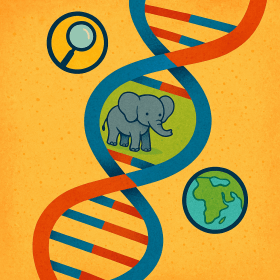
We all know detectives solve mysteries—but did you know scientists can, too? Using something inside every living thing—DNA—they can crack crimes, protect animals, and even discover your ancient ancestors.
Let’s explore how DNA helps solve real-life puzzles, and why it’s one of the most powerful tools in science today.
🧬 What is DNA?
DNA stands for deoxyribonucleic acid—a long word for the set of instructions that make you… you.
DNA is found in almost every cell in your body. It decides:
- Your eye colour
- Your blood type
- Whether you can roll your tongue
- And thousands of other things!
It’s like a recipe book for building a living thing. And guess what? No one has the exact same DNA as you—unless you have an identical twin.
🕵️♂️ DNA in Crime Solving
When someone commits a crime, they might leave behind tiny bits of DNA—like a strand of hair, a drop of blood, or even saliva on a cup.
Forensic scientists can:
- Collect the sample
- Analyse the DNA
- Match it to someone’s profile
It’s like a fingerprint, but even more accurate.
DNA has helped solve cold cases from decades ago and free innocent people from prison. It’s like having a microscopic detective on the scene!
🐘 Saving Endangered Animals
DNA doesn’t just help in courtrooms—it helps save animals, too.
Scientists use DNA to:
- Track poachers
- Identify illegal wildlife products
- Study animal populations
For example, if elephant ivory is found, experts can match its DNA to a specific region. That helps find out where poachers are operating and how to stop them.
DNA can even tell scientists if different animals are part of the same family group—helping them understand how to protect them better.
👵 What Can DNA Tell Us About You?
Ever wondered where your ancestors came from? Or what traits you’ve inherited?
Genetic testing kits (like 23andMe or AncestryDNA) can reveal:
- Where your family likely lived thousands of years ago
- What rare genes you might carry
- If you’re more likely to have certain traits—like loving or hating coriander!
But remember, this kind of information should always be used with care and privacy.
🤔 Imagine This…
What if you could use DNA to solve a mystery? Would you help crack a crime, save an endangered species, or learn more about yourself?
Science is always looking for curious minds—and maybe one day, you’ll be a DNA detective too.