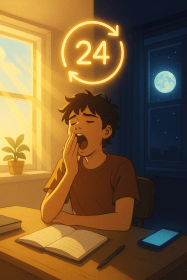
Have you ever felt wide awake at midnight but struggled to get out of bed for school? Or wondered why you feel sleepy in the afternoon, even if you had enough sleep?
It’s not just about being lazy — your body runs on its own internal clock, and it’s called the circadian rhythm.
This secret timekeeper controls when you sleep, wake, eat, and even when you feel focused or moody. Understanding it can help you feel better, learn better, and take better care of your mental health.
🧠 What Is a Circadian Rhythm?
A circadian rhythm is your body’s natural 24-hour cycle. It affects nearly every part of you — from how awake you feel to when your body repairs itself overnight.
It’s mostly controlled by a small part of your brain called the suprachiasmatic nucleus (or SCN), which responds to light. When it’s bright, the SCN tells your body to stay alert. When it gets dark, it triggers the release of a hormone called melatonin, which helps you feel sleepy.
Every living thing — plants, animals, even fungi — has a circadian rhythm. It’s nature’s way of keeping time.
😴 Why Teenagers Feel Tired in the Morning
Here’s the thing: teens have different body clocks than adults or kids.
During puberty, your circadian rhythm shifts later, meaning your body wants to fall asleep around 11pm or midnight — and wake up later too. That’s why early school starts can feel so brutal.
You’re not imagining it: your brain really isn’t ready to focus at 8am.
Unfortunately, school schedules don’t always match teen biology. But knowing about this shift can help you manage your time, sleep better, and avoid feeling tired and foggy all day.
📉 What Happens When You Ignore It?
When you fight against your natural rhythm — staying up too late on screens, sleeping at random times, or getting poor sleep — it can lead to:
- Feeling tired, moody, or low
- Struggling to focus in lessons
- Weak immune system
- Higher stress and anxiety
- Increased risk of health problems
Your brain and body love routine. When you get into a good rhythm, you feel better — it’s that simple.
🌙 How to Reset Your Body Clock
The good news? You can take control of your circadian rhythm. Here’s how:
✅ Get sunlight early in the day – Open your curtains or go outside in the morning. Light tells your brain it’s time to wake up.
✅ Go to bed and wake up at similar times – Yes, even on weekends. It helps your rhythm stay steady.
✅ Avoid screens before bed – Blue light from phones tricks your brain into thinking it’s daytime.
✅ Create a wind-down routine – Do something relaxing before sleep — reading, music, or deep breathing.
✅ Limit caffeine late in the day – It blocks melatonin and keeps your brain buzzing.
🧬 Circadian Rhythms and Mental Health
Sleep isn’t just about resting your body. It’s when your brain recharges, repairs, and builds memory. When your rhythm is off, your mental health can suffer — especially for teens dealing with stress, exams, or emotional challenges.
Keeping your circadian rhythm steady is one of the easiest ways to protect your mood, motivation, and focus.
🔄 Reflection question:
If your body has a built-in clock, how can you listen to it more — and help it work better?