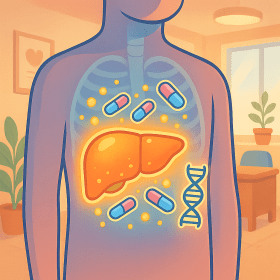
Imagine getting a single jab that quietly switches off one liver gene and keeps your “bad” blood fats down for years. No daily pills. No monthly injections. That’s the bold idea behind cholesterol gene editing—and a small trial suggests it might actually work. In people with very high lipids, one treatment cut harmful LDL cholesterol and triglycerides roughly in half within weeks. It’s early days, but it hints at future “one-and-done” heart-risk fixes.
What the new trial tested
In the study, adults with difficult-to-control blood fats received an infusion that delivers precise gene-editing instructions to the liver. The edit targeted a gene called ANGPTL3, which acts like a traffic controller for fats in the bloodstream. Turn it off, and the liver becomes better at clearing those fats.
At the higher doses, average LDL (“bad” cholesterol) and triglycerides fell by about 50% and stayed low across the early follow-up period. Most side-effects were mild, such as short-term changes in liver enzymes, and researchers continued to monitor everyone closely. Because this was a Phase 1 trial, the first aim was safety and dose-finding. Larger, longer studies will test how durable the effect really is and whether it prevents heart attacks and strokes—not just changes blood tests.
How switching off one gene lowers “bad” fats
Gene editing is a bit like a sat-nav for DNA. It finds a specific address in the genome and makes an intentional change. For cholesterol, scientists target liver genes that raise LDL, such as PCSK9 or ANGPTL3, and switch them off. Some approaches use base editing, which tweaks a single DNA “letter” without cutting both strands. Think of it as turning down a noisy speaker at the source, rather than wearing earplugs every day.
Here’s a surprising fact: some people are born with naturally inactive versions of PCSK9 or ANGPTL3. They tend to have very low LDL for life and a lower risk of heart disease—without obvious health problems from those genes being “off.” Researchers are copying that lucky biology on purpose, but only in the liver cells, and only after careful testing.
How this differs from statins and jabs you may know
Statins are proven, affordable, and taken daily. They save lives, but not everyone can tolerate them, and some people don’t reach safe LDL targets even with multiple medicines. There are also injections that block PCSK9 and a twice-yearly gene-silencing jab called inclisiran. These are powerful, but they require repeat dosing.
A gene-editing treatment, by contrast, aims to be “one-and-done.” You’d get a single dose, then routine checks with your healthcare team. The potential benefits are obvious—convenience, no worry about forgetting pills, and possibly years of protection. But big questions remain: How long will the effect last? Is it safe in the long run? And will it be available to the people who need it most?
Safety, ethics, and cost—what to watch next
Safety comes first. Researchers will follow participants for years to check for rare problems, monitor liver health, and look for “off-target” edits (changes in the wrong place). Delivery matters too: tiny lipid nanoparticles carry the editing instructions into liver cells, and those particles must be well-tolerated.
Then there’s fairness. New gene therapies often start with a high price. Health systems will weigh the upfront cost against decades of benefit, fewer hospital visits, and fewer heart events. Ethically, this is about editing somatic cells in adults (not embryos), so changes are not passed to children. Even so, transparency, informed consent, and long-term follow-up are essential.
What could the NHS do next?
The NHS already has real-world experience rolling out gene-editing treatments for rare blood disorders in specialist centres, with clear eligibility rules and long-term registries. That playbook—specialist hubs, careful selection, rigorous follow-up, and value-for-money checks—can help if cholesterol gene editing proves itself in bigger trials. If long-term studies show fewer heart attacks and strokes, the NHS could prioritise people at highest risk, such as those with familial hypercholesterolaemia or patients who cannot tolerate current treatments.
So, as you think about future health, ask yourself: if a safe one-off treatment could lock in lower LDL for years, would you choose it over daily pills—or would you want decades of extra data first? Your answer might balance convenience, safety, cost, and how comfortable you feel with editing a gene to prevent disease long before it strikes.