Submarines and Electrolysis: Breathing Underwater Like a Pro
Have you ever wondered how submarines stay underwater for so long without running out of air? It’s not like they can just open a window and let in some fresh air from the ocean!
The secret? Science — and something called electrolysis.
Let’s dive in (pun intended) and find out how submarines work, and how electrolysis helps people breathe underwater.
So, What Is a Submarine?
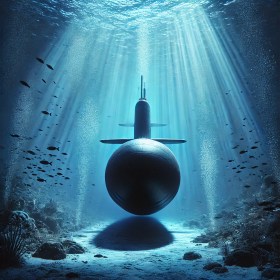
A submarine is a special type of boat that can travel deep underwater. You’ve probably seen one in a movie or video game — long, tube-shaped, and packed with buttons, screens, and people working in tight spaces.
Unlike regular boats, submarines can sink on purpose and stay underwater for days, weeks, or even months. They do this by using ballast tanks. These are big tanks inside the submarine that can be filled with water to make it sink, or filled with air to help it float back up.
But the big question is: how do the people inside breathe?
No Air? No Problem!
On land, we breathe oxygen from the air around us. But deep underwater, there’s no fresh air — and you can’t just pop up to the surface every time you need a breath.
That’s where electrolysis comes in. It’s a clever bit of chemistry that lets submarines make their own oxygen.
What Is Electrolysis?
Electrolysis is a process that uses electricity to split water into two gases:
- Hydrogen (H₂)
- Oxygen (O₂)
Water (H₂O) is made of hydrogen and oxygen. When you pass an electric current through water, it breaks apart into those two gases. The submarine collects the oxygen and pumps it into the air so the crew can breathe. The hydrogen is usually released into the sea or stored safely.
Pretty cool, right? It’s like doing a science experiment — but it’s keeping people alive!
Other Ways Electrolysis Helps
Breathing out creates another problem: carbon dioxide (CO₂). If too much CO₂ builds up in the air, it can make people sick. Submarines use filters and other systems (some also using electrolysis) to remove that gas and keep the air fresh.
Submarines also need power for lights, computers, and all the machines that make life underwater possible. In nuclear submarines, a nuclear reactor provides tons of energy — enough to power electrolysis systems 24/7.
Why Does This Matter?
Submarines are used by navies, scientists, and explorers. Whether they’re protecting countries, studying sea life, or going on rescue missions, they rely on science to survive under the sea.
Electrolysis isn’t just for submarines. It’s also used in factories, to make hydrogen fuel, clean metals, and even make products like chlorine.
So next time you’re learning about electrolysis in science class, just remember: the same process is happening right now, deep beneath the waves, helping people breathe inside a giant underwater tube!