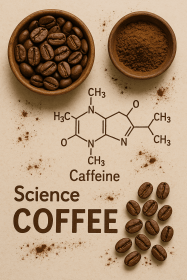
For many people, coffee is more than just a morning drink—it’s a daily ritual. But what is coffee made of? And how does it give us energy? Let’s explore the science behind every cup.
Where does coffee come from?
Coffee comes from the seeds of the coffee cherry, grown mainly in countries near the equator. These seeds are roasted to become the coffee beans we know.
The darker the roast, the stronger the flavour—but lighter roasts usually contain more caffeine!
What makes coffee powerful?
The main active ingredient in coffee is caffeine, a natural stimulant. It affects the central nervous system, helping people feel more awake, alert, and focused.
Caffeine works by blocking adenosine, a chemical that makes you feel tired. With adenosine out of the way, your brain stays more active. That’s why people often drink coffee to stay sharp during lessons or exams.
How does caffeine affect the body?
Once you drink coffee, the caffeine is absorbed into your blood and travels to your brain. It can:
Speed up your heartbeat, boost your mood, increase focus and energy raise your metabolism
However, not everyone reacts the same way. Some people feel jittery, anxious, or even have trouble sleeping after just one cup.
Is coffee healthy?
In moderation, coffee can actually be good for you. Some studies show it may:
Help with memory and brain health, lower the risk of certain diseases and improve physical performance.
But too much caffeine (especially from energy drinks) can be harmful. It can cause headaches, poor sleep, and increased anxiety. Teenagers are advised to limit caffeine to less than 100mg per day—that’s about one small cup of coffee.