When you think of climate change, you probably imagine rising temperatures, melting ice caps, and scorching heatwaves. But what if the real warning from Earth’s past is… another ice age?
It might sound strange, but scientists are looking at the history of our planet to better understand what the future could hold. And it turns out, Earth’s climate has not always been warm — in fact, it’s swung wildly between freezing cold and boiling hot.
So, what can ancient ice tell us about tomorrow? Let’s find out.
🧬 What Is an Ice Age?
An ice age is a long period of time — sometimes lasting thousands or even millions of years — when global temperatures are much colder than usual. Ice sheets grow across continents, sea levels drop, and animals and plants have to adapt or die out.
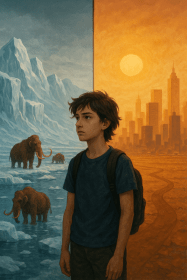
We’re currently in what scientists call an “interglacial period,” which means we’re living between ice ages. The last major ice age ended around 11,700 years ago — not that long ago, geologically speaking.
Back then, Britain was covered in glaciers, and huge animals like woolly mammoths walked across frozen land. Since then, the Earth has slowly warmed… until humans started heating things up much faster.
🌍 What Does the Past Tell Us?
Scientists study ice cores, fossils, and even ancient pollen to learn about past climates. These clues help show how the planet responded to natural changes, like shifts in Earth’s orbit or volcanic eruptions.
But here’s what’s new:
Some scientists are warning that by changing the atmosphere so quickly — with pollution, deforestation, and greenhouse gases — we might accidentally trigger a new ice age, or at least disrupt the systems that keep our climate stable.
Yes — global warming might eventually lead to cooling. Here’s how.
🌀 Could Global Warming Cause an Ice Age?
Sounds backwards, doesn’t it? But climate is all about balance.
Our planet relies on something called the thermohaline circulation — it’s like a giant ocean conveyor belt that moves heat around the globe. Melting ice in the Arctic adds too much fresh water into the oceans, which could slow down or even stop this circulation.
If that happens, places like Europe could get colder, even while the rest of the planet gets hotter.
This exact idea was the plot of a film called The Day After Tomorrow. While that movie was dramatic and not very accurate, the core idea — that messing with natural systems can lead to unexpected results — is true.
🧠 Why Does This Matter for Young People?
Because the future of Earth’s climate depends on decisions being made right now.
Climate change isn’t just about warmer summers. It’s about unpredictable shifts, rising seas, food insecurity, extreme weather… and yes, maybe even colder conditions in some areas.
Scientists are using past ice ages as warning signs. The Earth has changed before — without humans. But today, we’re the ones speeding things up.
You don’t need to be a scientist to make a difference. You just need to stay informed — and act in ways that protect the future.
❄️ Reflection question:
If we know Earth has changed before, what should we do differently now that we understand our impact?